Installing a home theater isn’t like mounting a TV above the fireplace. You’re dealing with speaker wire runs, in-wall equipment, calibrated audio zones, AV receivers with a dozen HDMI inputs, and acoustic treatments that need to work with your room’s geometry. Mess up the wiring or speaker placement, and you’ll spend thousands on equipment that sounds like it’s playing through a cardboard box. That’s why homeowners increasingly turn to professional installers who know the difference between Dolby Atmos ceiling speakers and standard in-ceiling models, and where to place them for the effect to actually work.
Table of Contents
ToggleKey Takeaways
- Professional home theater installation companies handle complex wiring, speaker placement, and calibration that DIY projects often fail to execute correctly, protecting your investment and ensuring optimal sound quality.
- When evaluating a home theater installation company, verify licensure, check detailed reviews, confirm liability insurance of at least $1 million, and request a portfolio of completed projects similar to yours.
- CEDIA-certified technicians with 5+ years of experience and familiarity with your specific brands deliver better results than novices, as they understand system calibration and proprietary control system quirks.
- Professional installation costs range from $500–$1,500 for basic 5.1 setups to $10,000–$25,000 for dedicated theater rooms, but the labor investment saves time and prevents costly mistakes that DIY installations often create.
- Hire a professional installer if your project includes in-ceiling speakers, projector mounting, whole-home audio systems, or smart home integration; only DIY simple upgrades like soundbar installations or basic TV mounts.
Why Hiring a Professional Home Theater Installation Company Makes Sense
A legitimate home theater setup involves low-voltage wiring that must comply with local electrical codes, mounting equipment securely to studs or blocking, and integrating components that need configuration beyond plugging them in. Professionals bring calibrated tools, laser levels, stud finders, cable testers, and acoustic measurement microphones, that most DIYers don’t own.
They also understand the sequencing. Wall-mounted speakers need blocking installed during framing or retrofit brackets that distribute weight properly. Subwoofers perform differently depending on corner placement versus mid-wall positioning due to room modes. An installer will test and adjust, not just guess.
Many home improvement projects require expertise that goes beyond YouTube tutorials, and home theaters sit squarely in that category. Beyond the technical work, pros carry liability insurance. If a mounted projector falls or wiring causes a short, you’re covered. DIY installations leave you holding the bag, and possibly dealing with your homeowner’s insurance.
Professionals also save time. What might take a homeowner three weekends of troubleshooting can be completed in one or two days by a crew that’s run hundreds of HDMI cables and programmed countless universal remotes. If you value your time at anything above minimum wage, the labor cost often justifies itself.
What to Look for When Evaluating Home Theater Installation Companies
Start by verifying licensure. Any company doing low-voltage electrical work should hold the appropriate state or local license. In many jurisdictions, running speaker wire and HDMI cables through walls requires a low-voltage electrical license, even though it’s not high-voltage work. Ask to see proof.
Check reviews, but read them critically. Look for mentions of communication, punctuality, and post-installation support. A five-star review that says “great guys.” tells you less than a four-star review explaining how the company came back to fix a calibration issue at no charge.
Ask for a portfolio. Reputable installers document their work, photos of clean wire runs, before-and-after shots, custom rack builds. If they can’t show you completed projects similar to yours, that’s a red flag. Also confirm they’re insured. Request a certificate of liability insurance and verify it’s current. General liability should cover at least $1 million per occurrence. If they’re doing any structural work (like adding blocking or running wire through fire-rated walls), workers’ comp is essential too.
Experience and Certifications
Look for CEDIA (Custom Electronic Design & Installation Association) certification. CEDIA-certified technicians have completed coursework in acoustics, video calibration, networking, and system design. It’s not a guarantee of quality, but it signals someone’s invested in learning beyond trial and error.
Experience with specific brands matters. If you’re installing a Sonos system, Control4 automation, or a Sony projector, find installers who’ve worked with those ecosystems. Proprietary control systems have quirks. You don’t want your installer learning on your dime.
Also ask how long they’ve been in business. A company that’s survived five-plus years has repeat clients and a reputation to protect. Fly-by-night operations often fold after a year, leaving you with no warranty support. For specialized projects such as home theater installation, experience separates decent work from truly dialed-in results.
Key Questions to Ask Before Hiring an Installer
Before signing a contract, get answers to these:
1. What’s included in the quote? Some quotes cover labor and installation but not wire, conduit, wall plates, or mounting hardware. Others are all-inclusive. Clarify upfront to avoid surprise charges.
2. Do you pull permits when required? Low-voltage work often doesn’t require permits, but if you’re opening walls or doing structural modifications, your jurisdiction may require one. A pro who skips permits is a pro who’ll skip other corners.
3. What’s your warranty policy? Equipment warranties are separate from installation warranties. The installer should warranty their labor, typically one year minimum. Ask what happens if a speaker mount fails or a wire connection goes bad.
4. Will you calibrate the system? Basic installers hook up gear and leave. Good installers run calibration software (like Audyssey, Dirac Live, or YPAO) to tune the system to your room. Calibration makes or breaks audio quality.
5. How do you handle wire concealment? In-wall runs are cleaner but more labor-intensive. Surface-mounted conduit or wire covers are faster and cheaper. Get specifics on their plan for your space.
6. What brands do you recommend, and why? If they push a single brand without explaining trade-offs, they might be getting kickbacks. A good installer will offer options at different price points and explain the pros and cons of each.
Understanding the Home Theater Installation Process
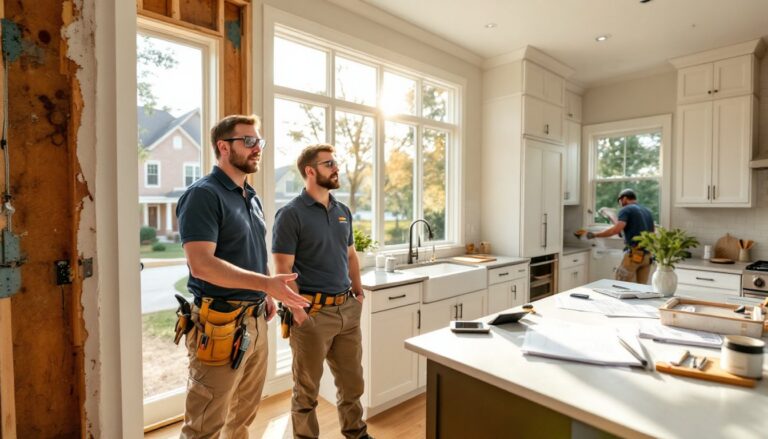
Most installations follow a predictable sequence. First comes the site survey. The installer assesses your room’s dimensions, existing wiring, stud locations, and acoustic challenges. They’ll note things like HVAC vents that create noise or windows that cause glare.
Next is system design. Based on your budget and goals, they’ll spec out equipment, speakers, receiver, projector or TV, seating, and control systems. This is where you decide between a 5.1 surround setup or a 7.2.4 Dolby Atmos configuration with ceiling speakers and dual subwoofers.
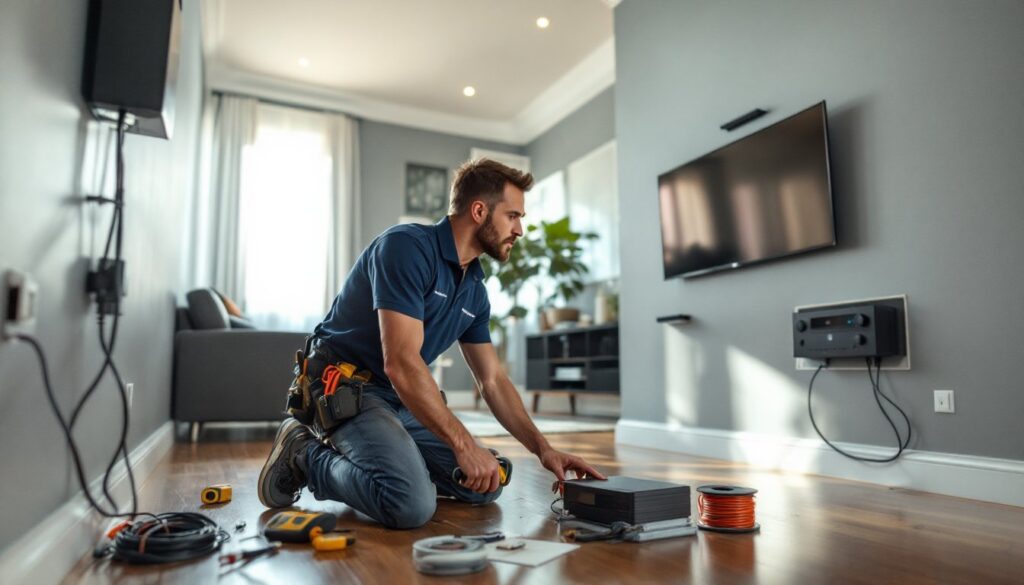
Once you approve the design, they run wiring before equipment arrives. Speaker wire, HDMI cables, and network lines get pulled through walls, attics, or crawlspaces. This is the messiest phase and often requires drywall patching afterward.
Then comes equipment mounting and connection. Speakers go into walls or ceilings, the projector mounts to the ceiling or a rear shelf, and the AV receiver gets racked or placed in a ventilated cabinet. Everything gets connected and labeled.
Finally, calibration and programming. The installer configures the receiver, programs the universal remote or control app, and runs room correction software to optimize sound. They’ll walk you through the system and leave you with documentation.
Total timeline: one to three days for a typical living room setup, longer for dedicated theater rooms with custom seating and lighting control.
Cost Considerations: What You’ll Pay for Professional Installation
Pricing varies wildly based on system complexity, room size, and regional labor rates. A basic 5.1 surround installation in an existing living room, with surface-mounted or minimally concealed wiring, might run $500 to $1,500 in labor, plus equipment.
A mid-tier setup with in-wall speakers, in-ceiling Atmos channels, a ceiling-mounted projector, and a motorized screen typically costs $3,000 to $7,000 in labor. Equipment can add another $5,000 to $15,000 depending on brands and screen size.
High-end dedicated theater rooms with custom acoustic treatments, tiered seating, lighting control, and advanced automation systems can push labor alone to $10,000 to $25,000, with total project costs exceeding $50,000 when you factor in construction, furniture, and top-shelf components.
Get itemized quotes. Labor should be broken out from materials. Some installers charge hourly ($75 to $150/hour is typical for experienced techs), others quote flat rates per project. For accurate budgeting, explore resources like home renovation cost guides that track regional pricing trends.
Don’t assume the cheapest bid is best. An installer who underbids often cuts corners, using lower-grade wire, skipping calibration, or rushing the job. Pay for quality, or you’ll pay again to fix it.
DIY vs. Professional Installation: Making the Right Choice for Your Home
If you’re handy with a drill, comfortable running wire through walls, and willing to research AV receiver settings for a few hours, a simple 5.1 system in a living room is doable. You’ll save labor costs and learn something in the process.
But DIY gets complicated fast. Fishing wire through insulated walls without a fish tape and patience is frustrating. Mounting a 60-pound projector to a ceiling joist you can’t see requires a stud finder, laser level, and someone to hold it while you drill. Calibrating a receiver with Dolby Atmos height channels involves test tones, microphone placement, and settings menus that read like aerospace engineering.
If your project involves any of the following, hire a pro:
- In-ceiling or in-wall speakers: Cutting drywall, running wire through studs, and patching require skill. Misplace a speaker by two feet and the soundstage collapses.
- Projector and motorized screen installation: Alignment is critical. A projector half an inch off-level creates a trapezoidal image no amount of keystone correction will fix.
- Whole-home audio or multi-zone systems: These require network configuration, amplifier matching, and often custom control programming.
- Integration with smart home systems: Linking your theater to Control4, Crestron, or Savant involves programming that’s well beyond plug-and-play.
If your goal is a simple soundbar upgrade or a TV mount, DIY is fine. If you’re investing $10,000-plus in equipment and want it to actually perform as designed, hire someone who’s done it a hundred times. Your time, your walls, and your sanity are worth it.