Double wide mobile homes offer something most single-wides don’t: actual elbow room in the bathroom. That extra square footage makes a bathroom remodel not just possible, but genuinely exciting. Unlike cramped bathrooms where every inch fights you, double wide bathrooms give you room to work with real design ideas, tile patterns, vanity upgrades, even standalone showers or tubs. Whether you’re working with an outdated ’80s layout or a builder-grade beige box, seeing what others have accomplished can spark real direction for your project. The before-and-after galleries and remodel examples in this guide focus on actual mobile home bathrooms, not stick-built houses, so the scale, construction details, and budget realities match what you’re facing.
Table of Contents
ToggleKey Takeaways
- Double wide mobile home bathrooms offer 5×8 feet or larger dimensions that support major renovations like walk-in showers, double vanities, and modern design upgrades unlike cramped single-wides.
- A cosmetic double wide bathroom remodel costs $1,500 to $3,500 in materials when DIY, while projects involving tile work, plumbing relocation, and electrical upgrades can reach $5,000 to $8,000.
- Modern farmhouse and contemporary minimalist styles work well in mobile home bathrooms using affordable materials like subway tile ($1–$3 per sq ft), luxury vinyl plank flooring ($2–$4 per sq ft), and shiplap accents.
- Proper prep work including measuring, identifying structural vs. cosmetic changes, testing for asbestos in pre-1980 homes, and using waterproofing membranes separates successful remodels from costly mistakes.
- Floating vanities, large-format porcelain tile, and frameless glass shower doors create custom-looking finishes in double wide bathrooms while improving resale value and buyer perception of maintenance.
Why Double Wide Bathrooms Are Perfect for Remodeling
Double wide mobile homes typically measure 24 to 32 feet wide, giving bathrooms dimensions closer to site-built homes, often 5×8 feet or larger. That’s enough space to replace a tub-shower combo with a walk-in shower, add a double vanity, or install a linen closet without sacrificing function.
The construction differences matter here. Most double wides built after the mid-1990s use 2×4 or 2×6 wall studs on 16-inch centers, similar to conventional framing. That means you can hang drywall, tile backer board, or beadboard without the weight restrictions of older single-wide paneling. Subfloors are often 5/8-inch OSB or plywood, adequate for ceramic or porcelain tile if you add an uncoupling membrane like Schluter-DITRA.
Plumbing and electrical access is better, too. Many double wides route water lines through a central chase or underneath the home, making it easier to relocate fixtures without tearing into multiple walls. Just remember: if you’re moving a toilet or adding a new circuit, check local code. Even in a mobile home, plumbing relocation often requires a permit.
Bathroom remodels in double wides also add measurable resale value. A clean, updated bathroom signals that the home has been maintained, which matters in a market where buyers often assume mobile homes are neglected.
Budget-Friendly Bathroom Remodel Ideas with Pictures
Modern Farmhouse Bathroom Transformations
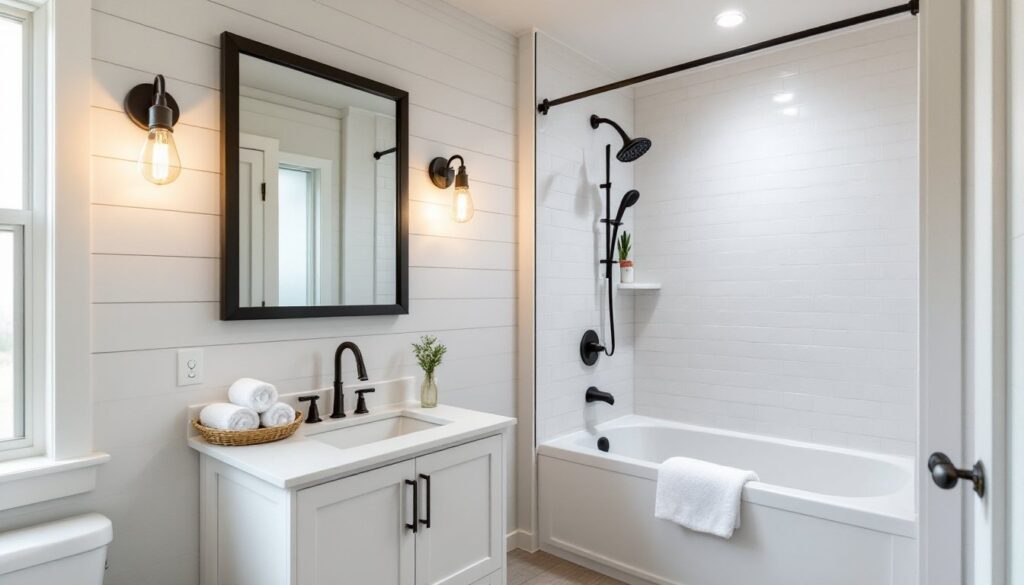
Modern farmhouse style translates well to mobile home bathrooms because it leans on affordable, accessible materials: shiplap, subway tile, matte black fixtures, and open shelving.
One popular transformation involves removing a builder-grade vanity and mirror, then installing a 30-inch or 36-inch farmhouse-style vanity with a vessel or undermount sink. Pair it with a large framed mirror, skip the medicine cabinet look unless you need the storage. Paint walls a warm white (SW Pure White or BM Simply White) and add 1×6 primed pine boards as shiplap on one accent wall. Run them horizontally with a nickel gap: you’ll use about 50 linear feet for an 8-foot wall.
For the shower or tub surround, white 3×6-inch subway tile costs $1 to $3 per square foot and installs over cement backer board (use 1/2-inch Hardibacker or equivalent). Grout in a light gray softens the look. Add a matte black shower fixture set and a fabric or linen shower curtain instead of a dated glass door.
Lighting matters: swap the single-bulb vanity bar for a three-light fixture with Edison bulbs or clear glass shades. Expect to pay $60 to $120 for a decent fixture that doesn’t look cheap.
Flooring pulls it all together. Luxury vinyl plank (LVP) in a light oak or whitewashed finish costs $2 to $4 per square foot and installs as a floating floor over existing vinyl or thin-set tile. For a 40-square-foot bathroom, budget about $120 in materials plus underlayment.
Contemporary and Minimalist Mobile Home Bathrooms
Contemporary remodels strip away visual clutter and rely on clean lines, neutral palettes, and a few high-impact materials.
Start with a wall-mounted vanity in white, gray, or natural wood. Floating vanities make small bathrooms feel larger and simplify floor cleaning. Pair it with a rectangular undermount sink and a wall-mounted faucet if your plumbing allows (this requires relocating supply lines inside the wall, not a beginner move, but doable).
For walls, skip the farm style and go with large-format tile, 12×24-inch porcelain in gray, taupe, or concrete-look finishes. Larger tiles mean fewer grout lines, which reads as cleaner and more modern. Budget $3 to $6 per square foot for mid-grade porcelain. These tiles are heavy, so confirm your subfloor can handle the load: add a layer of 1/4-inch cement board if you’re working over particleboard or thin OSB.
Install a frameless glass shower door if your layout supports it. This single upgrade makes the bathroom feel custom. Expect to spend $300 to $600 for a basic frameless door kit, plus installation.
Lighting should be recessed or flush-mount, no busy fixtures. Use LED retrofit kits in existing cans or add new 4-inch slim recessed lights (these fit in shallow ceiling cavities common in mobile homes). If you’re adding electrical, you’ll need to pull a permit in most jurisdictions: the National Electrical Code (NEC) requires GFCI protection for all bathroom receptacles within six feet of a water source.
Platforms like Remodelista and homify showcase hundreds of minimalist bathroom galleries you can filter by size and style, helpful when you’re trying to visualize scale in a mobile home context.
Step-by-Step: Planning Your Double Wide Bathroom Renovation
1. Measure everything. Not just floor dimensions, measure door swing clearance, distance from the toilet flange to the back wall (should be 12 inches from center to finished wall), vanity height, and window placement. Take photos from multiple angles.
2. Identify what’s structural and what’s cosmetic. Replacing flooring, fixtures, and finishes is cosmetic. Moving walls, relocating plumbing drains, or adding windows is structural and often requires permits. Check with your county building department early.
3. Set a realistic budget. A cosmetic refresh (paint, vanity, fixtures, flooring) runs $1,500 to $3,500 in materials if you DIY. Adding tile work, moving plumbing, or upgrading electrical can push that to $5,000 to $8,000. Don’t forget the 10% contingency for surprises like rotted subfloor or bad plumbing.
4. Order materials in sequence. Drywall and backer board first, then tile and flooring (allow these to acclimate 48 hours in the room before install), then fixtures and trim. Vanity and toilet come last so they don’t get damaged during construction.
5. Plan for downtime. Even a fast remodel takes a full weekend if you’re doing surfaces only. Tile work adds at least three days (prep, set, grout, cure). If it’s your only bathroom, line up a backup plan.
6. Prep the space properly. Remove the toilet (turn off water, flush, disconnect, pull the closet bolts). Pull up old flooring completely, don’t layer new over old unless the surface is perfectly flat and sound. Patch and prime all walls before tile or paint. Most DIY failures happen because someone skipped prep.
7. Know when to call a pro. Tile work on floors is manageable for a confident DIYer with a wet saw. Tile in a shower enclosure is harder, waterproofing membranes and proper slope matter. If you’ve never done it, consider hiring out the shower and doing the rest yourself. Same for plumbing: replacing a faucet is easy: moving a drain line usually isn’t.
Real Before and After Remodel Picture Galleries
Before-and-after photos show what’s possible without the marketing gloss of pro contractor portfolios. Look for galleries that include:
- Material lists and costs so you can compare your budget
- DIY vs. pro work breakdowns to see what the homeowner tackled and what they hired out
- Timelines that give you realistic expectations
- Mistakes and fixes because everyone hits a snag
Common transformations include:
- Dated oak vanities replaced with painted or white shaker-style cabinets
- Popcorn ceilings scraped and repainted (wear a dust mask, older mobile homes may have asbestos texture: test first)
- Almond or beige fixtures swapped for white or matte black
- Vinyl flooring upgraded to LVP or ceramic tile
- Single-bulb light bars replaced with multi-light fixtures or sconces
- Mirrors expanded from small medicine cabinets to large framed or frameless versions
- Tub-shower combos re-tiled or refinished, or replaced with walk-in showers
When browsing photos, pay attention to scale. A beautiful bathroom in a 1,200-square-foot condo might not translate to a double wide with 7-foot ceilings and narrower doorways. Look for remodels specifically tagged as mobile home, manufactured home, or modular projects.
Safety note: If you’re demoing walls or ceilings in a pre-1980 mobile home, test for asbestos in wall texture, flooring mastic, and insulation. Kits cost about $40 and take two weeks for lab results. Don’t sand, cut, or disturb materials until you know.
Conclusion
Double wide mobile home bathrooms offer more remodeling potential than most people expect. With the right materials, a clear plan, and honest attention to prep work, you can achieve a finished look that rivals site-built homes, often for a fraction of the cost. Whether you lean toward farmhouse charm or minimalist lines, the key is working within the home’s structure and not fighting it. Take your time, measure twice, and don’t skip the unsexy stuff like underlayment and waterproofing. That’s where good remodels separate themselves from regrettable ones.