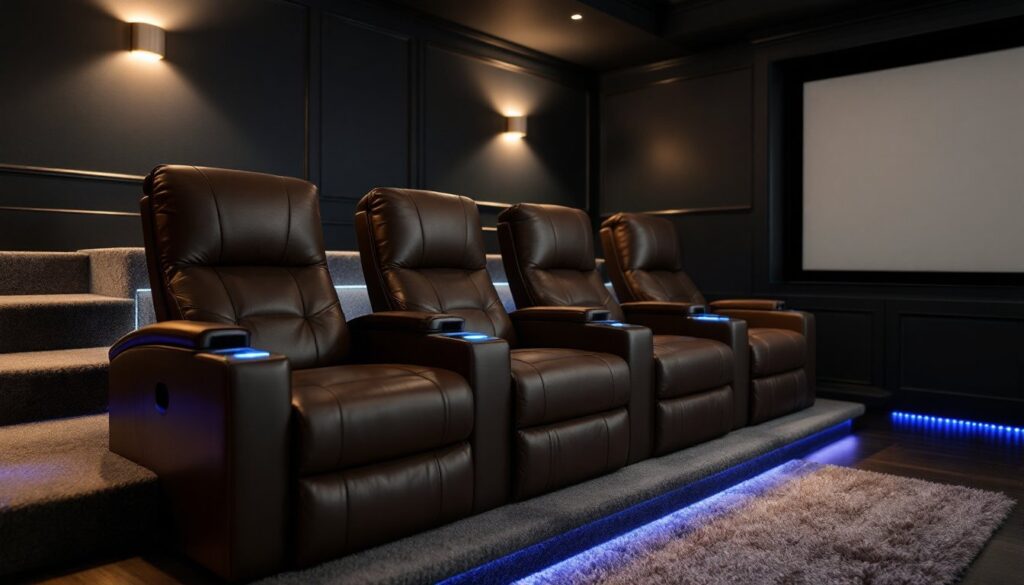
Genuine leather theater seating transforms a basement or spare room into a cinema-worthy retreat. Unlike bonded leather or vinyl that crack and peel after a few years, real leather ages gracefully, developing character while maintaining structural integrity. It’s an investment that balances durability, comfort, and resale value, but only if you understand the material grades, construction details, and maintenance requirements. This guide walks through everything needed to select, configure, and care for leather theater seats that’ll last decades, not just a warranty period.
Table of Contents
ToggleKey Takeaways
- Genuine leather home theater seating lasts 15-25 years with proper care, significantly outlasting cheaper bonded leather alternatives that fail within 3-5 years.
- Top-grain and full-grain leather offer superior durability and breathability compared to corrected-grain or split leather, making them worth the premium investment for long-term performance.
- Quality frame construction with kiln-dried hardwood and eight-way hand-tied or sinuous springs is essential for structural integrity and preventing sagging over decades of use.
- Plan room layout carefully by measuring wall-to-wall dimensions, accounting for 3 feet of walkway space, and allowing 36-42 inches of center-to-center spacing between rows for comfortable traffic flow.
- Routine maintenance—weekly vacuuming, immediate spill cleanup, and leather conditioning every 6-12 months—protects your investment and maintains the rich patina that genuine leather develops over time.
- Mid-range leather theater seating ($2,000-$3,000 per seat) provides the best balance of quality, durability, and value for most home theater installations.
Why Choose Genuine Leather for Your Home Theater?
Genuine leather offers tangible advantages over synthetic alternatives in high-use seating. Breathability ranks first, leather’s porous structure wicks moisture away during long movie marathons, preventing the sticky, sweaty back common with vinyl or polyurethane upholstery. Temperature regulation follows close behind: leather stays cool in summer and warms quickly in winter without the clammy feel of faux materials.
Durability separates genuine leather from cheaper options. A quality leather hide resists punctures, stretching, and surface abrasion far better than bonded leather (which is mostly polyurethane mixed with leather scraps). Expect 15-25 years from top-grain leather with proper care, compared to 3-5 years before bonded leather starts flaking.
Leather also simplifies cleaning. Spills sit on the surface rather than soaking into fibers, and most stains wipe away with a damp cloth. Pet owners appreciate this, claw marks on leather often buff out or add patina, while fabric shows permanent snags.
The main trade-off? Initial cost. Genuine leather theater seating typically runs $1,200-$3,500 per seat depending on grade and features, compared to $400-$900 for quality fabric recliners. But amortized over two decades, leather often costs less per year of use. Designers featured in luxury interior magazines consistently specify leather for high-traffic seating precisely because it outlasts and out-performs alternatives in real-world conditions.
Types of Genuine Leather Used in Theater Seating
Not all “genuine leather” equals the same quality. The term legally applies to any product containing real animal hide, but processing methods create massive performance differences.
Corrected-grain leather sits at the entry level of genuine leather. Manufacturers sand away surface imperfections, then stamp or emboss an artificial grain pattern. It’s still real leather, just heavily processed. Expect moderate durability and a somewhat plastic appearance. This grade typically appears in budget theater seating priced under $1,500 per seat.
Split leather comes from the lower layers of the hide after the top grain is removed. It’s thinner, less durable, and often requires a polyurethane coating for protection. Some manufacturers use split leather on seat backs and sides while reserving better grades for contact surfaces. Always ask which sections use which leather grade.
Top-Grain vs. Full-Grain Leather
Top-grain leather represents the second-highest quality tier. The outer surface is lightly sanded to remove minor blemishes, then finished with a protective coating. This process creates uniform color and texture while maintaining most of the hide’s natural strength. Top-grain balances aesthetics and durability, it resists staining better than full-grain but won’t develop the same rich patina over time. Most mid-to-high-end theater seating ($2,000-$3,000 per seat) uses top-grain leather on primary contact areas.
Full-grain leather preserves the entire outer layer of the hide, including natural markings, pores, and grain variations. It’s the most durable and breathable option, aging into a soft, lustrous finish that many consider the hallmark of quality furniture. Full-grain shows scratches and marks more readily than top-grain, but these often blend into the developing patina. Theater seating with full-grain leather starts around $2,500 per seat and can exceed $5,000 for premium configurations. Publications like Architectural Digest frequently showcase full-grain leather furnishings in high-end home theaters for exactly this reason, the material telegraphs both luxury and longevity.
Aniline and semi-aniline refer to dyeing methods, not leather grades. Aniline leather receives only transparent dye, preserving natural texture but offering minimal stain protection. Semi-aniline adds a light protective topcoat. Most theater seating uses semi-aniline top-grain or full-grain for a practical balance of appearance and maintenance.
Key Features to Look for in Leather Theater Seating
Frame construction determines whether seating lasts two decades or two years. Kiln-dried hardwood frames, typically beech, oak, or birch, provide structural integrity that won’t warp or crack. Avoid engineered wood or softwood frames in theater seating: the constant reclining stress concentrates force on joints that particle board can’t handle long-term.
Check for eight-way hand-tied springs or sinuous (S-shaped) spring systems. Hand-tied springs offer superior support and longevity but add $200-$400 per seat to the cost. Sinuous springs work well in quality seating and resist sagging better than webbing or mesh suspension. Press firmly on the seat cushion, it should rebound quickly without bottoming out on the frame.
Reclining mechanisms range from manual pull-tabs to powered systems with programmable positions. Power recliners require dedicated 120V outlets within 6 feet of each seat, plan electrical during room design, not after drywall goes up. Look for mechanisms rated for at least 50,000 cycles (roughly 20 years of daily use). Metal gears outlast plastic components: examine a floor model or request spec sheets.
Cup holders, USB charging ports, and ambient lighting add convenience. Stainless steel cup holders resist corrosion from condensation and clean easier than plastic. USB ports should output at least 2.4 amps per port to charge tablets and phones at reasonable speed.
Lumbar support and adjustable headrests matter for viewing sessions over two hours. Fixed headrests often position poorly for viewers under 5’4″ or over 6’2″. Articulating headrests add $75-$150 per seat but improve comfort significantly.
Weight capacity typically ranges from 250-350 pounds per seat. If household members exceed 275 pounds, verify capacity with the manufacturer, frame and mechanism ratings differ from cushion compression specs.
How to Choose the Right Size and Configuration
Start with room measurements, not seat count. Allow 3 feet of walkway width in front of the first row for safe passage when seats recline. Fully extended recliners add 20-26 inches to the seat’s footprint, measure your specific model before committing to a layout.
Seat width typically runs 20-24 inches for standard theater chairs. Larger individuals may prefer 26-28 inch “grand” seats. Sit in floor models for at least 15 minutes: a seat that feels fine for 5 minutes can create pressure points during a three-hour movie marathon.
Measure wall-to-wall width and subtract 6 inches for safe clearance. Divide the remaining space by your chosen seat width to determine maximum capacity per row. For example, a 144-inch-wide room minus 6 inches leaves 138 inches. Five 24-inch seats total 120 inches, leaving 18 inches for armrest overlap and spacing, adequate. Six seats would create a cramped 108-inch seating run with minimal breathing room.
Row spacing requires 36-42 inches center-to-center (measured from the front edge of one row to the front edge of the next). Tighter spacing forces people to shuffle sideways past reclined seats. Wider spacing improves traffic flow but reduces total capacity. Resources like Homedit’s theater seating guides often recommend 38-40 inches as the sweet spot for home installations.
Riser height for second or third rows should elevate each row 8-12 inches above the one in front. This allows clear sight lines over the heads in front. Building risers requires structural evaluation, a 12-inch riser spanning 12 feet needs proper framing and foundation support. Check local codes: some jurisdictions classify stepped theater seating as a structural alteration requiring permits and inspections.
Loveseat vs. individual seat configuration affects flexibility. Loveseats share a center console but cost 10-15% less than two individual seats. But, if one reclining mechanism fails, you’ll need to repair or replace a larger unit. Individual seats allow independent replacement and easier maneuvering through doorways and stairwells.
Maintaining and Caring for Your Leather Theater Seats
Leather requires consistent but minimal maintenance. Vacuum weekly using a soft brush attachment to remove dust and debris from crevices. Dust particles act as abrasives, accelerating surface wear if left to accumulate.
Wipe spills immediately with a barely damp microfiber cloth. Don’t saturate the leather, excess water can leave stains or cause the hide to stiffen. For sticky residues, use a cloth dampened with distilled water and a drop of pH-neutral soap (like Castile soap). Avoid household cleaners containing silicone, petroleum distillates, or ammonia: these strip protective finishes.
Condition leather every 6-12 months depending on humidity and use. Leather conditioner replenishes oils that evaporate over time, preventing drying and cracking. Apply a thin coat with a soft cloth, let it absorb for 10 minutes, then buff away excess. Over-conditioning leaves a greasy residue that attracts dirt.
Control temperature and humidity. Leather performs best at 40-55% relative humidity. Below 30% causes drying and cracking: above 70% promotes mold growth. Use a dehumidifier or humidifier as needed. Keep seating at least 2 feet from HVAC vents and 4 feet from fireplaces, direct heat sources dry out leather rapidly.
Sunlight fades and dries leather. If the theater room has windows, install blackout shades or UV-filtering film. Even indirect sunlight degrades leather over months of exposure.
For scratches, try rubbing gently with a clean finger, body heat and oils often blend minor marks into the surrounding leather. Deeper scratches may require color-matched leather repair kits, which include filler compound and pigmented sealers. Test repair products on an inconspicuous area first (usually the seat back bottom edge).
Rotate seat use if possible. The center seat in a row typically sees heavier wear than end seats. Periodically swapping cushions (if removable) or encouraging family members to vary seating positions extends overall lifespan.
Pets and leather: Trim pet nails regularly. Even careful animals can puncture leather with sharp claws. Consider throw blankets for seats when pets are present, they’re easier to wash than repairing upholstery.
Budget Considerations and Where to Buy
Genuine leather theater seating pricing breaks down roughly as follows:
- Entry-level (corrected-grain or split leather): $1,200-$1,800 per seat
- Mid-range (top-grain leather, power recline): $2,000-$3,000 per seat
- Premium (full-grain leather, advanced features): $3,000-$5,500+ per seat
These figures reflect 2026 pricing in most U.S. markets but vary by region, retailer markup, and current leather commodity prices. A four-seat setup can easily run $8,000-$12,000 for quality mid-range seating.
Specialty furniture retailers and dedicated home theater shops offer the widest selection and knowledgeable staff. They typically provide in-home measurement services and handle delivery/installation. Expect to pay 15-25% more than big-box stores, but warranty service and customization options often justify the premium.
Online retailers and direct-to-consumer brands undercut showroom prices by 20-30%. The trade-off? You can’t physically test seating before purchase. Scrutinize return policies, some charge 15-20% restocking fees plus return shipping, which can exceed $300 for theater seating. Check for white-glove delivery (includes unpacking and assembly): curbside delivery leaves you wrestling 150-pound recliners through doorways alone.
Warehouse clubs occasionally stock leather theater seating at competitive prices, but selection is limited and often features lesser-known brands. Verify leather grade and frame construction before buying, some “leather” seating at warehouse clubs uses corrected-grain or split leather extensively.
Delivery and installation add $150-$400 for most configurations. If the seating goes into a basement, confirm the delivery team will navigate stairs, many “threshold delivery” services drop items at the first dry interior entrance, not your chosen room.
Financing options through retailers typically offer 12-24 month interest-free periods. If you can pay off the balance before the promotional period ends, this costs nothing. Miss the deadline, and retroactive interest often applies to the original purchase amount at rates exceeding 25% APR. Only finance if you’ve budgeted monthly payments that retire the balance ahead of schedule.
Warranty coverage varies widely. Look for at least:
- 10-year frame warranty
- 5-year mechanism warranty
- 1-year leather and cushion warranty
Lifetime warranties sound impressive but often exclude wear items like leather, foam, and mechanisms, essentially covering only the frame. Read the fine print.